Cookieless A/B Testing: How to Run Experiments Without Third-Party Cookies
Third-party cookies are going away. Here's how to run A/B tests without them — including what changes under India's DPDP Act and GDPR.
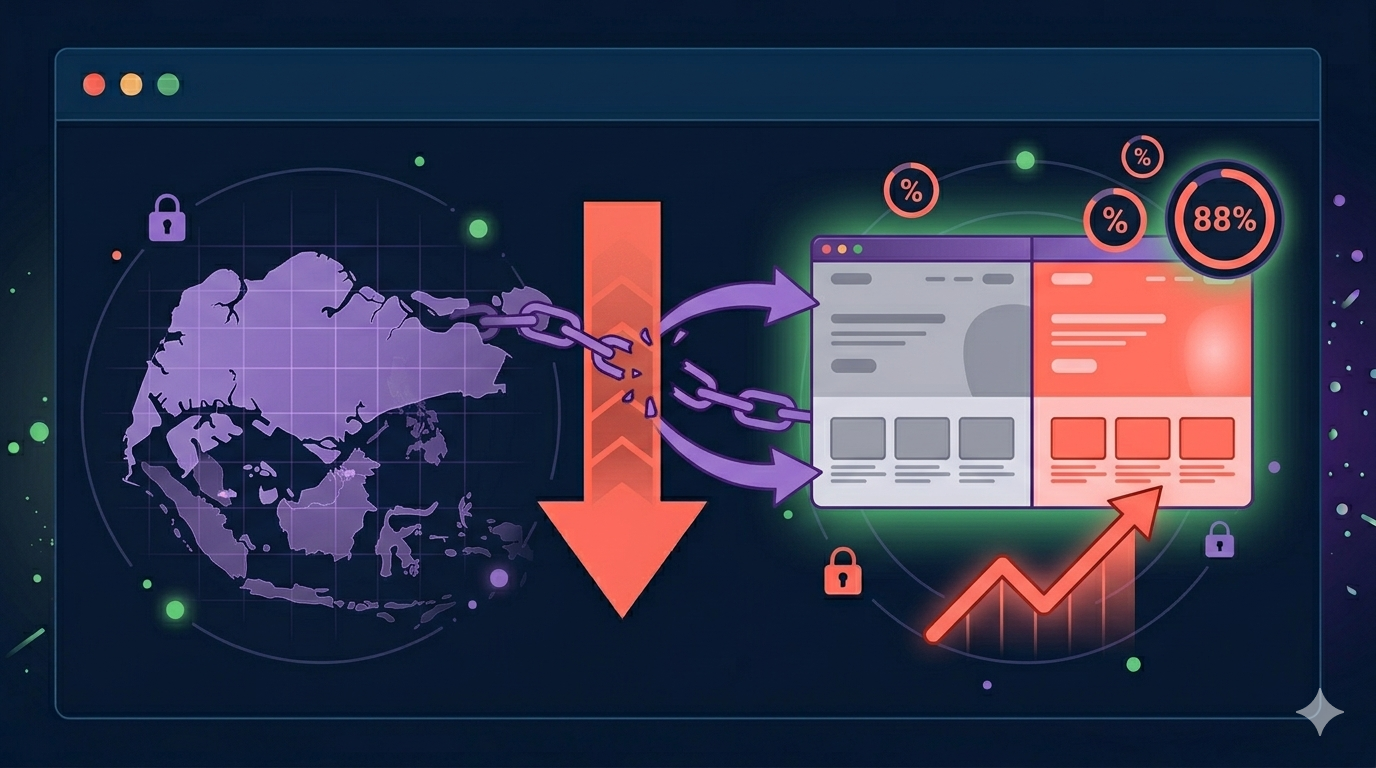
Third-party cookies are disappearing — and your A/B testing setup might not survive the transition.
Chrome’s Privacy Sandbox, India’s Digital Personal Data Protection (DPDP) Act 2023, GDPR enforcement in Europe, and PDPA updates across Southeast Asia are all pointing in the same direction: the cookie-based tracking era is ending. For growth teams running experiments on third-party cookie data, this creates a real problem.
The good news: you can still run powerful A/B tests. You just need to do it differently.
This guide explains exactly how to run cookieless A/B testing in 2026 — what it means, what to change, and which approach is right for your setup.
Why Cookies Matter for A/B Testing (And Why They’re Going Away)
Traditional A/B testing tools assign a user to a variant (A or B) by setting a cookie on their browser. When the user comes back, the cookie identifies them and shows the same variant. This is how consistency works — seeing variant B on visit 1 and variant A on visit 2 would corrupt your data.
Third-party cookies are cookies set by domains other than the one the user is visiting. Most A/B testing tools historically used third-party cookies to:
- Track users across sessions
- Share data between the testing tool and analytics platforms
- Build audience segments for targeting
Why they’re disappearing:
- Chrome Privacy Sandbox: Google has been phasing out third-party cookies through 2025-2026
- India DPDP Act 2023: Requires explicit consent for data collection; cookie consent frameworks are now legally required
- GDPR (Europe): Long-standing requirements that intensified in 2023-2025
- Safari/Firefox: Already blocked third-party cookies by default for years
- iOS 14+ (Apple): Limited cross-app tracking since 2021
If your A/B testing tool relies on third-party cookies and you haven’t addressed this yet, you have a compliance and data quality problem.
The 3 Approaches to Cookieless A/B Testing
Approach 1: First-Party Cookies (The Easiest Transition)
First-party cookies are set by the domain the user is actually visiting. They are generally still permitted under GDPR, DPDP, and other privacy regulations — with proper consent management.
How it works: Your A/B testing tool sets a cookie on yoursite.com instead of a third-party domain. The cookie stores the variant assignment.
Why this works: First-party cookies are under your control, can be properly disclosed in your cookie policy, and are compliant with most privacy regulations when accompanied by a consent notice.
Limitation: Doesn’t work across domains (if your testing involves subdomains or cross-domain journeys). Users who block all cookies won’t be tracked.
ClickVariant uses first-party cookie assignment by default. This means your experiments are unaffected by third-party cookie deprecation without any code changes on your end.
Approach 2: URL-Based Assignment (No Cookies at All)
Instead of storing variant assignment in a cookie, you pass it as a URL parameter.
How it works:
- User arrives at
yoursite.com/?variant=B - The page renders variant B
- The URL parameter persists through the session
Why this works: Zero dependency on cookies. Works everywhere, including browsers that block all cookies.
Limitation: URL parameters can be stripped by some tracking tools, links, or browser redirects. It only works for sessions where you control the entry URL (paid ads, email links) — not for users who type in the URL directly.
Best use case: Paid ad landing page tests, email campaign variant tests, or any test where you control traffic sources.
Approach 3: Server-Side Assignment
The most robust cookieless approach. Variant assignment happens on your server before the page is rendered.
How it works:
- User makes a request to your server
- Your server (or edge function) determines which variant to show
- The correct version of the page is returned to the user
- No cookie or client-side script is needed to determine the variant
Why this works: Completely immune to browser privacy restrictions. Zero flicker (the page renders correctly from the first millisecond). Excellent for performance-sensitive applications.
Limitation: Requires developer involvement to implement. Works best for teams with server-side rendering (SSR) setups — Next.js, Nuxt, Rails, Django, etc.
Best use case: Technical teams who can implement server-side experiments and want the cleanest possible data and fastest page loads.
Cookieless A/B Testing Under India’s DPDP Act
India’s Digital Personal Data Protection Act 2023 took effect in phases through 2025-2026. If you’re running a SaaS product or D2C brand targeting Indian users, here’s what it means for your experiments:
What DPDP requires:
- Explicit consent before collecting personal data — including behavioral tracking
- Right to withdraw consent — users can opt out, and your systems must respect that
- Data minimisation — only collect what you need
- Localisation requirements — certain categories of data must be stored within India
For A/B testing specifically:
- If your test assigns users by cookie AND you use that data to personalise future experiences (retargeting, email sequences), you likely need explicit consent
- If your test purely measures aggregate conversion rates without any personal data linkage, the requirements are lighter
- A consent banner is now best practice for any Indian website running behavioral tracking
Practical steps:
- Implement a cookie consent banner (Cookieyes, Usercentrics, or a custom solution)
- Make sure your A/B testing tool respects consent signals — don’t run experiments for users who have denied tracking consent
- Switch to first-party cookies (covered above) — these are easier to disclose and manage consent for
ClickVariant’s lightweight JS SDK is designed to work with consent management platforms. You can gate the entire SDK activation behind user consent without any additional configuration.
How Cookieless A/B Testing Affects Your Data
Sample size impact: If a portion of your users deny cookie consent, they won’t be included in your experiments. This reduces your effective sample size and increases the time needed to reach statistical significance.
Rule of thumb: Expect 15–30% of users to deny cookie consent in European markets, 5–15% in Indian and SEA markets where DPDP and similar laws are earlier stage. This is significant but manageable if you plan for it.
What to do: Add 20–30% to your expected sample size when calculating test duration. ClickVariant’s sample size calculator factors this in if you input your expected traffic.
The Variant Consistency Problem (And How to Solve It)
The hardest part of cookieless A/B testing is consistency: making sure the same user sees the same variant on every visit.
If a user sees variant B on Monday and variant A on Wednesday, your data is contaminated.
Solutions:
-
Long-lived first-party cookies: Set your cookies to expire in 30–90 days (not session-only). Most users won’t clear cookies that frequently.
-
User ID-based assignment: If users are logged in, use their user ID (not a cookie) to determine variant.
user_id % 2 === 0shows variant A;user_id % 2 === 1shows variant B. This is deterministic and cookie-free for authenticated users. -
Fingerprinting (use carefully): Device fingerprinting can identify users without cookies. However, fingerprinting is explicitly restricted under GDPR and DPDP and should only be used with clear disclosure and consent.
-
Accept inconsistency for short tests: For 5-7 day tests targeting high-traffic pages, a small percentage of variant inconsistency (users who clear cookies or switch devices) won’t meaningfully affect results. Run the math with ClickVariant’s sample size calculator.
Quick Setup: Running a Cookieless A/B Test in ClickVariant
ClickVariant uses first-party cookies by default. Here’s how to run your first cookieless experiment:
- Install the ClickVariant snippet on your page — one line of JavaScript
- Create your experiment in the dashboard — visual editor, no code
- Set your targeting rules — URL, audience, geo
- Connect your conversion goal — button click, form submit, page visit
- Launch — variants are assigned via first-party cookies automatically
If you’re integrating with a consent management platform:
// Only initialise ClickVariant after consent is granted
cookieConsentPlatform.onConsentGranted(() => {
  clickvariant.init({ key: 'YOUR_KEY' });
});
That’s it. ClickVariant starts tracking only after the user has consented.
The Bottom Line on Cookieless Testing
Cookieless A/B testing is not a theoretical future problem. Under India’s DPDP Act, GDPR, and Chrome’s Privacy Sandbox, it’s a present requirement for any serious testing program.
The good news: the transition is manageable. First-party cookies cover most use cases. Server-side testing covers the rest. And for teams who want to move fast without a developer, ClickVariant handles first-party cookie assignment automatically.
Privacy regulations are tightening. Start building your consent-first experimentation setup now — before a compliance issue forces you to pause your testing program entirely. New to A/B testing? Read our guide for startups running their first experiments.